
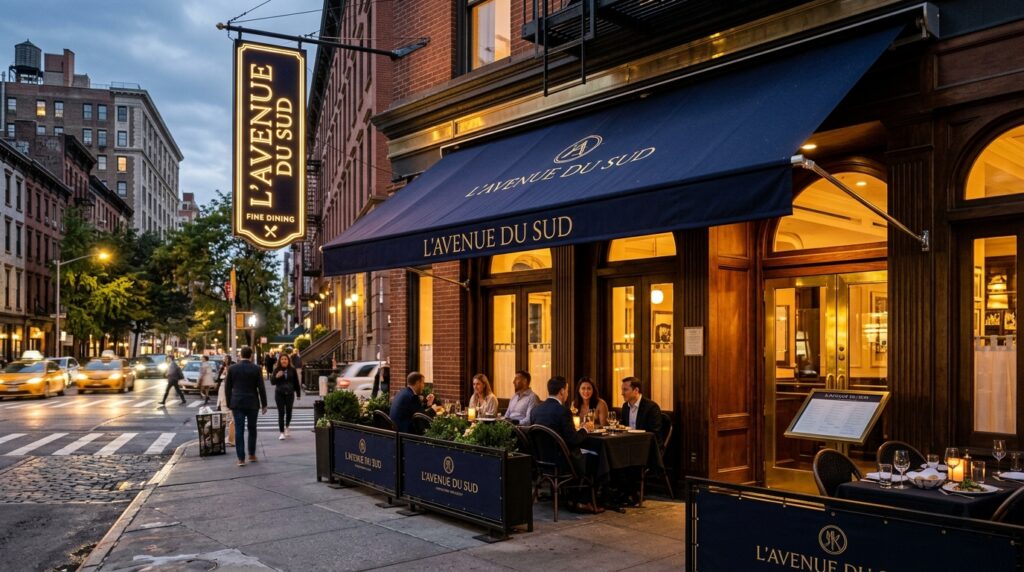
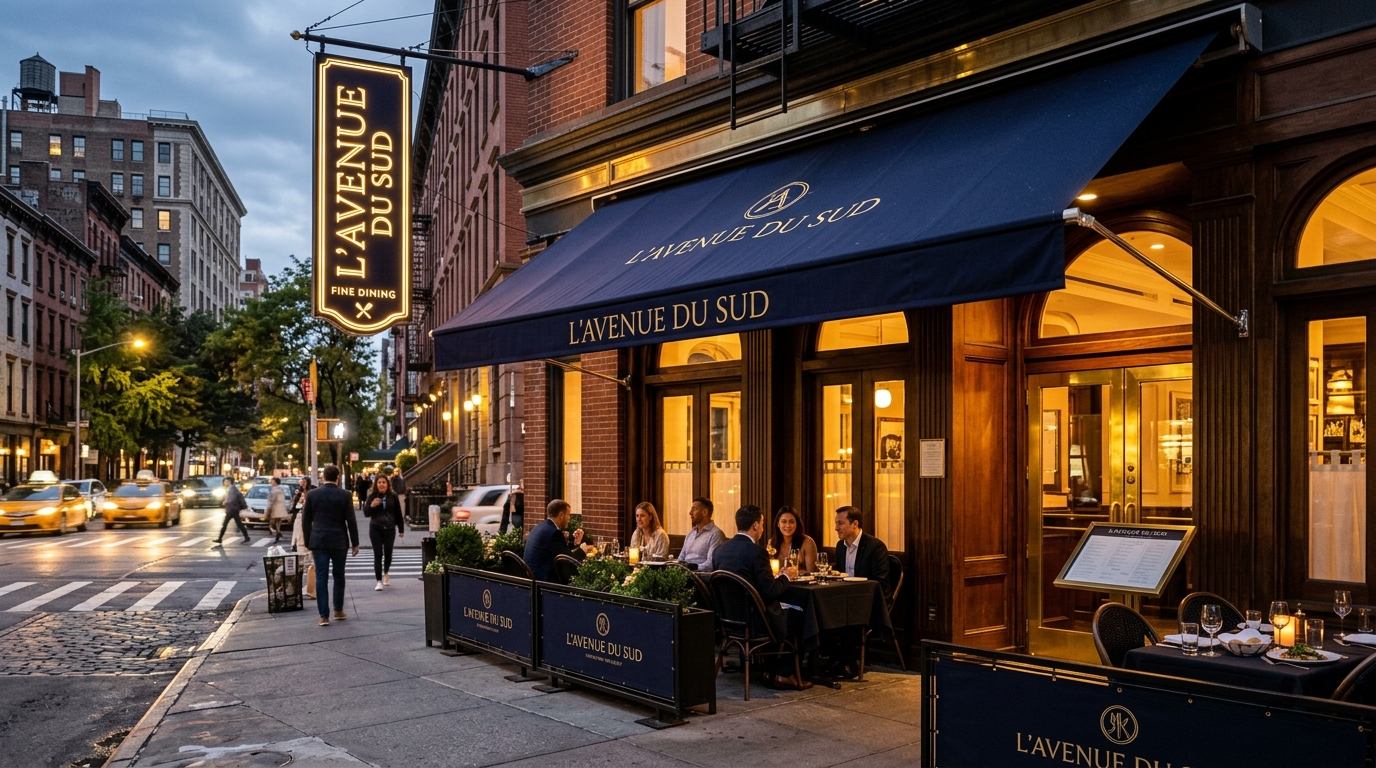
Walking down the bustling sidewalks of Manhattan or Brooklyn, pedestrians rarely look straight up at flat fascia signs. Instead, their eyes naturally scan perpendicular sightlines along the sidewalk. This makes projecting blade signs the single most effective visual tool for capturing foot traffic in dense urban environments.
1. NYC Department of Buildings (DOB) Clearance & Projection Rules
Because projecting signs extend over public sidewalks, the NYC DOB and Department of Transportation (DOT) enforce strict zoning and clearance regulations:
- Minimum Vertical Clearance: The lowest edge of any projecting sign must maintain a minimum of 10 feet of clear headroom above the sidewalk surface.
- Maximum Projection Limit: Under standard NYC commercial zoning, a blade sign cannot project more than 4 feet 6 inches from the building line or within 2 feet of the curb.
- Maximum Sign Face Area: Single-tenant projecting signs are typically capped between 12 to 24 square feet per face depending on street zoning (C1/C2 vs. C4/C5 districts).
2. Navigating the Landmarks Preservation Commission (LPC)
If your commercial property is located in an LPC-designated historic district (such as Greenwich Village, Brooklyn Heights, or the Tribeca West Historic District), strict material and lighting standards apply:
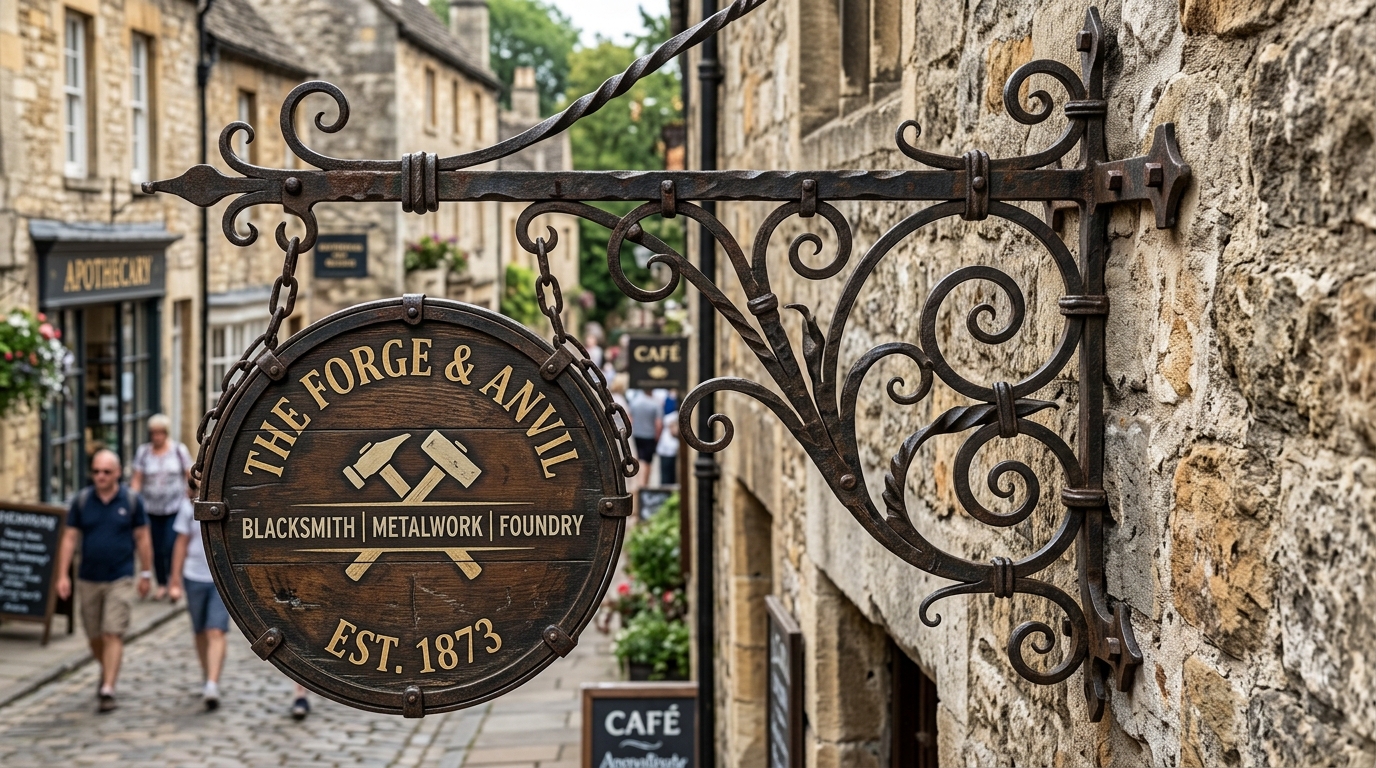
- Approved Materials: Hand-forged wrought iron, cast bronze, carved wood, and painted aluminum with satin or matte finishes.
- Lighting Restrictions: Direct exposed neon or bright internally illuminated plastic faces are generally prohibited. The LPC favors gooseneck downlighting or subtle warm-white (2700K?3000K) halo backlighting.
- Master Bracket Reuse: Whenever possible, attaching to existing pre-approved architectural mounting brackets expedites permit sign-offs.

3. Wind-Load & Structural Engineering Calculations
NYC building codes require all exterior projecting signs to withstand wind gusts up to 110 MPH (Exposure Category B/C). A double-sided 36? x 36? blade sign acts like a sail in heavy winds, exerting significant rotational torque on the building facade.
Essential Structural Engineering Details:
- Through-Wall Backing Plates: For hollow cinder block or brick masonry, 3/8? steel interior backing plates distribute tensile force across multiple structural courses.
- Hilti Epoxy Adhesive Anchors: For solid limestone or poured concrete facades, chemical epoxy anchors prevent masonry splitting.
- Safety Guy Wires: Larger or high-elevation blade signs require diagonal stainless steel aircraft cables for secondary wind-load stabilization.
4. Modern Push-Through Acrylic vs. Traditional Cabinets
| Style | Illumination | Best For |
|---|---|---|
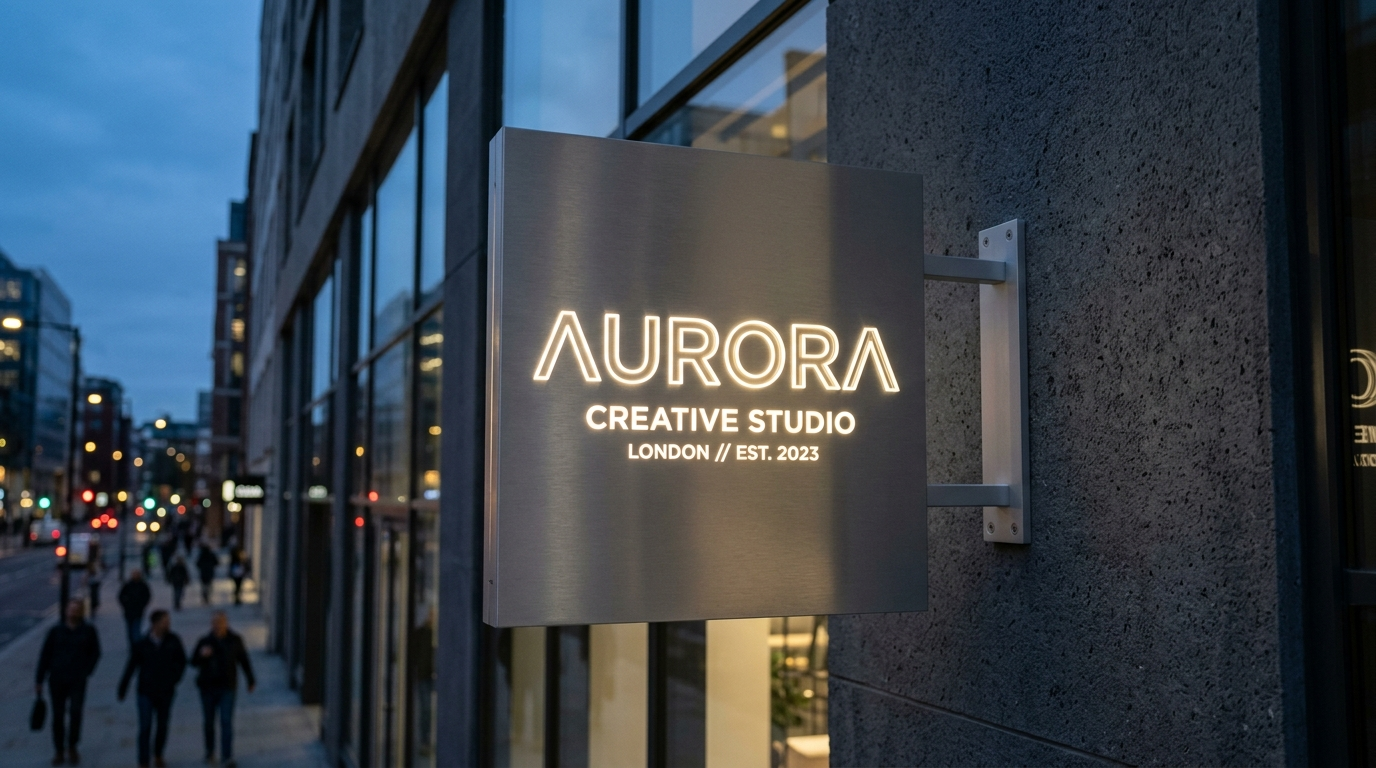
| Push-Through Acrylic | 1/2? acrylic letters glow through routed aluminum face | Modern retail, tech studios, chic cafes |
| Traditional Extruded Box | Full translucent acrylic face with vinyl graphics | Pharmacies, bodegas, high-volume retail |
| Architectural Non-Illuminated | External gooseneck spot lamps | Historic districts, artisan bakeries, boutique hotels |

5. Summary & Next Steps
Investing in a custom-engineered projecting blade sign ensures your brand is immediately visible to thousands of pedestrians passing your doorway every hour. At SignsRiver, our master sign hangers manage the entire lifecycle?from structural engineering drawings and DOB permit filing to custom CNC metal fabrication and crane installation.
Check out our dedicated Projecting Blade Signs NYC services or request a project consultation today.